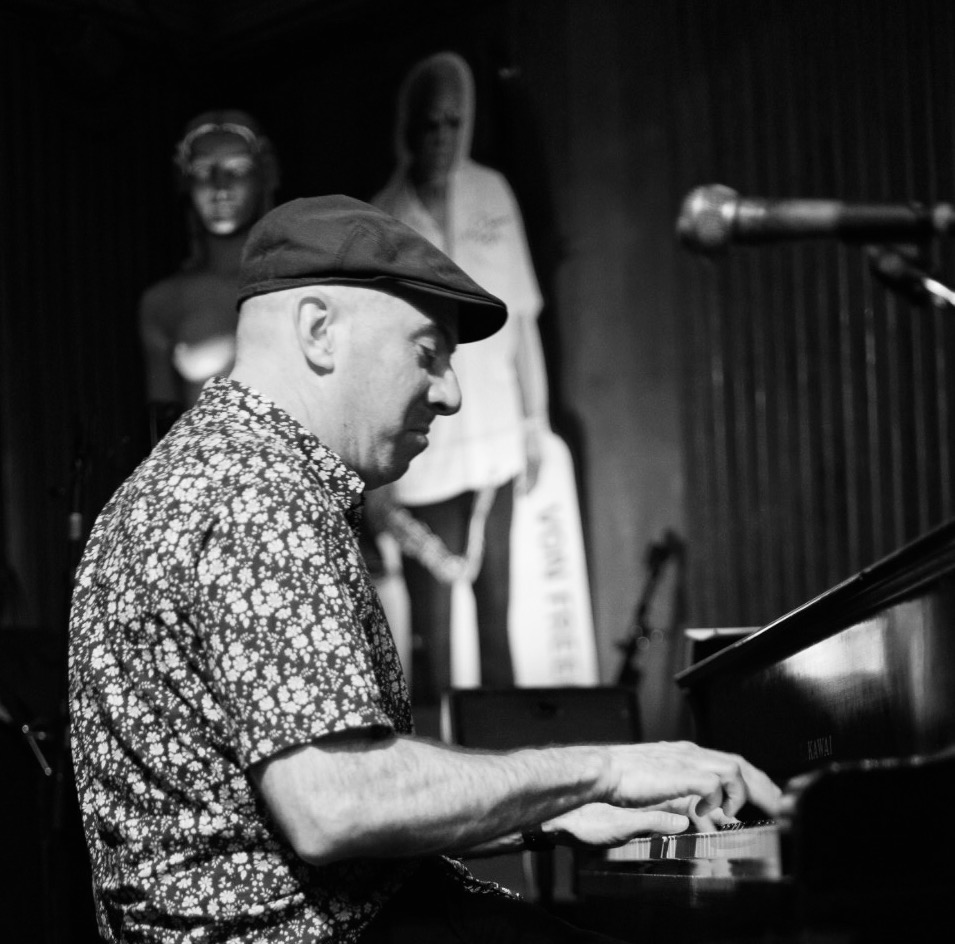
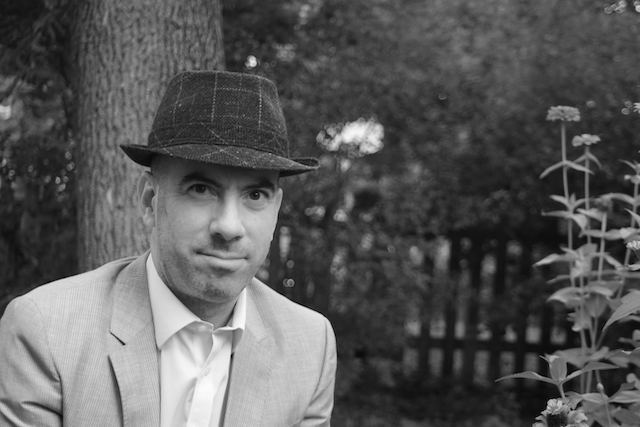
An initially self-taught pianist, Hecht fell in love with jazz in high school and pursued traditional music education in college in Amherst, Massachusetts, studying with, notably, Yusef Lateef (even as Lateef famously scorned the use of the word “jazz”). But his interests in classical music and literature led him to study poetry and poetry writing, in Cornell University’s highly unusual PhD/MFA joint degree program. During those years he also studied violin and eventually performed with various chamber ensembles, and later in an orchestra. Then as a young English professor living in Chicago, he quickly fell in with musicians, including the remarkable pianist and composer Rob Clearfield. Along the way he also befriended members of the International Contemporary Ensemble (ICE), a force in new music in the late 2000s in Chicago as well as New York, and eventually organized a performance by director Claire Chase at Gidon Kremer’s Lockenhaus Festival in Austria.
During this time Hecht was writing about Renaissance poetry, as professors do, which culminated in a book published by Oxford University Press in 2022 (What Rosalind Likes), and was also directing student performances of Shakespeare and other Renaissance drama in northwest Indiana. These productions also served as opportunities to make further artistic connections in Chicago, with Clearfield composing music, and other artists helping with choreography (both dance and violence!) and costumes and design. In retrospect, however, the musical connections were more important: Hecht was hearing how more and more music could be connected with emotions and scenes of the maximum interest and vitality: his passions were finding how they could entwine and merge in music. And teaching students how to make audiences pay attention turns out to also be a useful skill set for live musical performance.
A sabbatical to work on his book also afforded the opportunity to return to the piano with Clearfield as a new guide. Eventually Hecht began attending jam sessions hosted by some of his most admired members of the scene: Ulery, Quin Kirchner, and, critically, Greg Ward. On those stages he absorbed as a performer things that he had until then understood more theoretically: the commitment to honesty, openness; the work ethic to do justice, by long hours of practice, to the myriad traditions that flow into the music; the commitment to the humanity and potential of everyone who participates in the music, on stage and off, on any given night.
In 2020, his wife (also an English professor) got a new post at a college in Eau Claire, Wisconsin, and the couple agreed that it was time for Hecht to make the big switch: he would leave his professorship and turn his full attention to performance and composition, aiming to make up for lost time.
 Paul J. Hecht